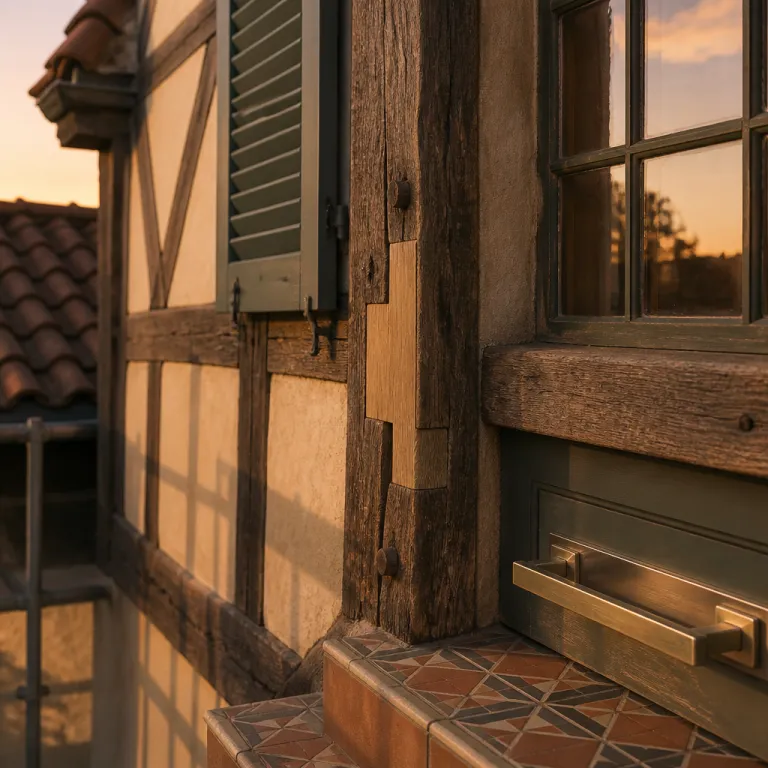
What makes a half-timbered hotel in Alsace feel genuinely historic ?
Walk into a refined half-timbered hotel in Alsace and the first impression is structural rather than decorative. The dark oak skeleton, infilled with limewashed panels, tells you exactly how the house was built and how it has moved over centuries. In the best hotels, every room respects this original rhythm, so your stay feels anchored in a real maison rather than a themed stage accommodation.
Alsatian half timbered architecture is distinctive because the timbered houses are both engineering and storytelling. In villages such as Kaysersberg, Eguisheim and the old city of Colmar, the façades lean, twist and step back, reflecting how each house adapted to its narrow plot along the wine route. Colours are not random either ; in many villages, the pastel blues, greens and ochres once signalled professions, taxes or links to the nearby vineyard culture of Alsace wine.
For travelers choosing a half-timbered hotel Alsace option, the key is to read these façades like a map. A maison des vignerons near a vineyard will often have wide doors at street level for barrels, while a former merchant house in Strasbourg or Colmar city might show larger windows and a more formal rue des frontage. When a hotel respects these clues, the number rooms, the circulation and even the luggage transport routes follow the building’s logic rather than forcing a generic layout.
Nowhere is this more visible than around Petite France in Strasbourg, where timbered houses once belonged to millers and tanners. Here, the most interesting hotel projects keep the low beams and uneven floors, but they refine acoustics, lighting and air conditioning so a double room feels serene, not cramped. The result is a stay where you sense the centuries in every corridor, yet the comfort quietly matches any contemporary hotel spa in France.
Restoration challenges : from crooked beams to contemporary comfort
Turning a 400-year-old house into a luxury hotel in Alsace is an exercise in negotiation. Heritage rules protect façades, rooflines and structural beams, while modern hospitality demands perfect insulation, silent air conditioning and flawless bathrooms. Architects working on a half-timbered hotel Alsace conversion often say the real design happens in the gaps between those beams.
Inside many historic houses Alsace, floors slope several centimetres from one side of a room to the other. Leveling everything would erase the building’s character, yet leaving it untouched can make a double room feel disorienting and complicate luggage transport or closed bicycle storage for guests arriving with vélos. The most sensitive restorations use discreet platforms, custom joinery and carefully placed steps, so the room reads as calm while the original structure remains legible.
Bathrooms are another fault line between past and present in these timbered houses. In Colmar or Kaysersberg, a former merchant’s maison might now hold a compact hotel spa in its vaulted cellar, while upper floors accommodate only a few rooms with generous showers tucked under the roof. Designers must thread plumbing through centuries-old beams without compromising them, often accepting a lower number rooms in exchange for better proportions and more privacy.
Noise control is equally critical, especially in lively villages along the wine route where evening wine tastings and village festivals continue late. Thick insulation between rooms, solid doors and acoustic glazing on rue des façades allow guests to enjoy the city or village energy, then retreat to silence. If you plan a cycling trip with transport stage services and a bicycle garage, ask how the hotel manages sound between storage areas and guestrooms, because a thoughtful layout signals a serious approach to comfort.
For travelers who prioritise wellness, the region’s thermal heritage adds another layer of complexity and opportunity. Some of the most ambitious projects weave a contemporary spa into the historic fabric, drawing on Alsace’s long balneotherapy tradition ; for a deeper dive into this culture, see our guide to why Alsace’s thermal tradition delivers a distinctive spa experience. When a hotel spa is carved out of old stone cellars beneath half timbered upper floors, the contrast between rough masonry and smooth water rituals can be strikingly luxurious.
Design strategies : how old beams meet modern hospitality
The most compelling half-timbered hotel Alsace projects treat design as a dialogue between centuries. Rather than hiding the structure, they use lighting, materials and circulation to frame each beam as part of the guest experience. You feel this immediately when you enter a room where the bed aligns with the timber grid instead of fighting it.
Lighting is often the quiet hero in these conversions, especially in narrow houses along the canals of Petite France or in the dense streets of Strasbourg city. Designers use warm, low-level fixtures to graze the timbered walls, revealing the grain and the irregularities that prove the house was built by hand. In contrast, bathrooms and circulation areas often receive crisper, more contemporary light, signalling a shift from historic envelope to modern function.
Furniture choices matter just as much as lighting in a maison des vignerons or a former merchant house in Colmar. Slimline wardrobes, integrated desks and carefully scaled armchairs keep the room feeling generous, even when the footprint is constrained by centuries-old walls. When a hotel offers stage accommodation for cyclists or hikers, smart storage for luggage transport and velos closed facilities can be integrated into alcoves or former service rooms without disturbing the main timbered spaces.
Climate control is another test of design intelligence in these houses Alsace. Discreet ducting, underfloor heating and hidden fan coils allow effective air conditioning without bulky units hanging from the façade or cutting across beams. If you are sensitive to temperature, ask how the system is built into the structure ; a thoughtful solution usually signals equal care in soundproofing and bedding.
For travelers who love architecture, it can be fascinating to compare how different regions handle this old-meets-new tension. Our coverage of elegant South of France hotels shows how Mediterranean properties play with light and stone, while Alsace leans into timber, plaster and steep roofs. In both cases, the most successful hotels share one trait ; they let the building’s original purpose guide the design rather than imposing a generic luxury template.
From Colmar to Strasbourg : where heritage hotels feel most alive
Choosing where to stay along the Alsace wine route is as much about architecture as it is about wine. In Strasbourg, the half-timbered quarters around Petite France offer a dense urban experience, with hotels tucked into former artisans’ houses overlooking the Ill river. Colmar, by contrast, feels more intimate, its timbered houses clustered around canals and small squares where the rhythm of village life still sets the pace.
Within Colmar, the historic Maison des Têtes stands as a reference point for how a grand merchant house can evolve into a refined hotel. The sculpted heads on its façade give the building and the nearby rue des Têtes a strong identity, and many travelers use “têtes Colmar” as shorthand when they talk about this part of the city. Around it, other maisons and hotels echo the same vocabulary of steep roofs, carved oriels and painted beams, creating a streetscape where every house seems ready to become a stage for contemporary hospitality.
Smaller wine villages such as Kaysersberg and Eguisheim offer a different kind of immersion. Here, a half-timbered hotel Alsace stay often means waking up above a cobbled square, with the vineyard rising just behind the last row of houses. Many properties are former winemakers’ homes, where the courtyard once used for pressing grapes now hosts a quiet terrace, and the old press room becomes a lounge or tasting space for serious Alsace wine.
For travelers torn between a city base and a village stay, our guide on where to stay in Alsace breaks down the trade-offs. Strasbourg offers easier rail access, more restaurants and a wider choice of hotel spa options, while Colmar and the surrounding villages excel at intimate timbered houses and direct access to the vineyard. If you plan a multi-night itinerary with transport stage services, consider mixing a city hotel with a village maison to experience both sides of the region.
Practical details still matter, even in the most atmospheric properties. Ask about bicycle garage facilities, closed bicycle storage and luggage transport if you are following the wine route by bike or on foot. Clarify the number rooms and whether each room type, from compact single to generous double room, benefits equally from the historic character and modern upgrades you expect at this level.
How to read the details : rooms, services and the new European heritage trend
Across Europe, heritage properties are being reimagined as small design-led hotels, and Alsace sits at the heart of this movement. The region’s half timbered architecture, dense network of villages and strong wine culture make it a natural laboratory for this kind of hospitality. For a solo explorer, learning to read the details of a half-timbered hotel Alsace listing can turn a good stay into a remarkable one.
Start with the basics ; the number rooms often reveals how deeply the hotel has respected the original house. A very high room count in a narrow village maison may indicate heavy restructuring, while a modest number suggests the layout still follows the historic plan. Look for mentions of bicycle garage facilities, luggage transport options and velos closed storage if you are moving between villages, because these services show the property understands the realities of slow travel along the wine route.
Room descriptions deserve the same scrutiny as façade photos. A genuine historic house in Colmar, Strasbourg or a smaller village will usually mention beams, alcoves or unusual volumes, but it should also specify air conditioning, soundproofing and the presence of a hotel spa or at least high-quality bathrooms. When a property highlights stage accommodation for hikers or cyclists, check that the comfort level in each room type, especially the double room, matches the promise of the public spaces.
Service culture is where the best houses Alsace truly differentiate themselves. Staff who can share precise advice on vineyard visits, explain the history of the maison des vignerons you are sleeping in, or suggest a quiet rue des walk away from the crowds, add depth to your stay. When they talk about luggage transport logistics or transport stage timings with the same care as they describe a rare Alsace wine, you know you are in a hotel that understands both heritage and contemporary travel.
This attention to detail reflects a broader European trend, where luxury is increasingly defined by context rather than excess. In Alsace, that means a timbered façade that has been carefully built and maintained, a room that balances authenticity with comfort, and services that support a slower, more thoughtful way of moving between villages. For travelers who care how a building becomes a hotel, this region offers one of the most compelling open-air classrooms in France.
FAQ
How can I tell if a half-timbered hotel in Alsace is genuinely historic ?
Check whether the building is listed or referenced by local heritage authorities, and look for signs that the structure, not just the décor, is half timbered. Uneven floors, visible beams and slightly irregular room shapes often indicate an authentic historic house rather than a new construction with a themed façade. Reviews that mention both character and comfort suggest the hotel has invested in sensitive restoration rather than superficial styling.
Is a half-timbered hotel in Strasbourg or Colmar better for a first stay ?
Strasbourg suits travelers who want a lively city base, with Petite France, major museums and easy rail connections. Colmar offers a more intimate scale and quicker access to wine route villages such as Kaysersberg and Eguisheim, where many timbered houses sit close to the vineyard. If you have time, combining one or two nights in each city gives a balanced first impression of Alsace.
Are historic half-timbered hotels comfortable for tall guests ?
Low beams and sloping ceilings can be a challenge in some older houses, especially in attic rooms. Many high-end restorations address this by reserving the most irregular spaces for lounges or storage, while placing beds where headroom is generous. If you are tall, ask the hotel to recommend a room with higher ceilings and check recent guest photos before booking.
What should cyclists and hikers look for when booking in Alsace’s historic villages ?
Seek out hotels that explicitly mention bicycle garage facilities, closed bicycle storage or secure vélos closed areas, especially in busy wine route villages. Luggage transport partnerships and flexible check-in times are useful if you are using transport stage services between towns. It is also worth confirming whether your room is on a higher floor without a lift, as some protected houses cannot accommodate elevators.
Do half-timbered hotels in Alsace usually have air conditioning and modern bathrooms ?
Many luxury and premium properties have integrated discreet air conditioning and contemporary bathrooms during restoration, but not all historic houses can support full retrofitting. In summer, this can make a noticeable difference to comfort, particularly in compact rooms under the roof. Always check room descriptions carefully and, if necessary, email the hotel to confirm the exact equipment in your chosen room type.