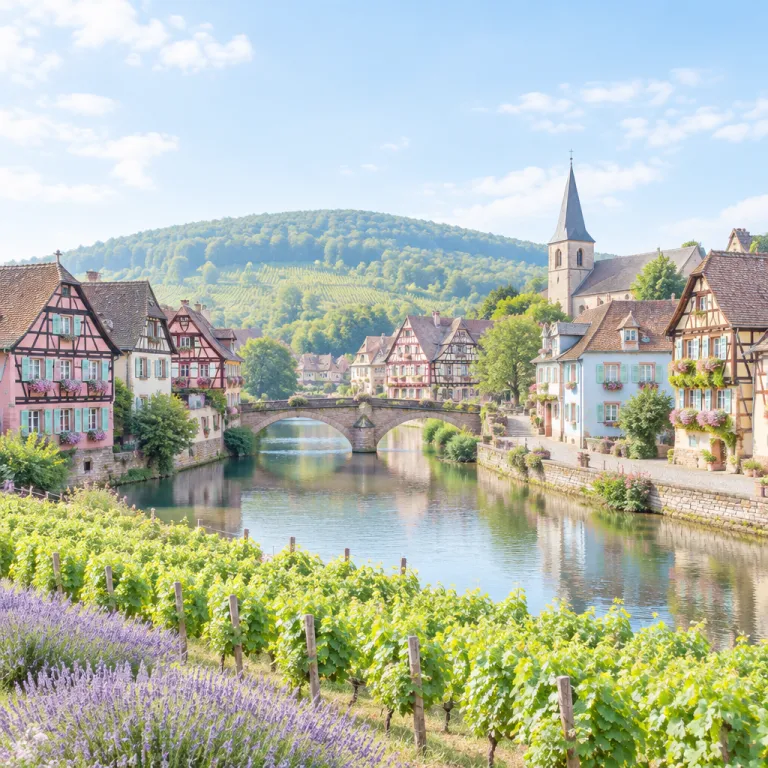
Why Andlau and Bergheim belong on your hidden villages Alsace shortlist
Hidden villages in Alsace itineraries usually start with a familiar map of the region, yet Andlau and Bergheim sit quietly between the headline towns. For visitors who have already walked the canals of Colmar and crossed every bridge in the city of Strasbourg, these two villages offer a slower rhythm and a different relationship with time. They feel like places designed for three or four nights, not a rushed day trip.
Andlau lies in a narrow valley at the heart of the Alsace Wine Route, wrapped in Grand Cru vineyards and forested slopes that keep the town sheltered and calm. Bergheim, by contrast, is a compact medieval village on a gentle rise, its intact ramparts circling timbered houses and gardens that still feel resolutely Alsatian rather than stage set. Together they form a perfect pairing of Alsace villages for independent travellers who want the beauty of the charming towns Alsace is known for, without the tour bus choreography.
Both places that Alsace fans mention in hushed tones are easy to reach by car, yet they remain under the radar compared with more Colmar-famous addresses on any tour of the region. You come here not for a checklist of sights, but for a journey at the heart of the wine country where history, culture and wine are part of daily life. Stay long enough and you start to understand how the Alsace region reveals itself slowly, one open-air café table and one evening glass of Riesling at a time.
Andlau: abbey stones, Grand Cru slopes and a valley made for lingering
Andlau is where hidden-village Alsace fantasies meet real history, with an ancient abbey at its centre and steep vineyards rising almost immediately behind the last house. The town grew around a Benedictine foundation dating from the 9th century, and you still feel that monastic sense of enclosure as you wander from the Romanesque church of Saints-Pierre-et-Paul to the river and back in a single unhurried day. This is a place where visitors quickly trade a packed day tour for slow walks between vines and timbered houses.
The Grand Cru sites of Kastelberg, Wiebelsberg and Moenchberg wrap the town in a tight amphitheatre, turning every short stroll into an impromptu wine tour. Well-known local vignerons such as Domaine Rémy Gresser or Domaine Marc Kreydenweiss work these slopes, and many cellars open for tastings on late mornings and late afternoons, especially from Tuesday to Saturday. You can arrange focused wine sessions, then step back to your hotel on foot in less than ten minutes. For travellers planning a longer trip through Alsace, Andlau works beautifully as a base for two or three nights, with easy access by car to nearby towns the region is famous for, yet enough distance to keep the crowds away.
From Andlau, a day trip along the wine route can include Obernai, Barr or even a discreet detour towards La Petite Pierre in the northern Vosges, giving a sense of the wider region without sacrificing the village calm. Independent travellers who already visit Alsace regularly often say this valley is where their relationship with the region deepens, because the history and culture of winegrowing are not curated for a camera. They are simply the way the town lives, from early morning work in the vines to late nights at the winstub when the last glass is poured.
Bergheim: ramparts, roses and a quieter side of the wine route
Bergheim is one of the rare small towns Alsace still keeps almost entirely behind its medieval walls, with a ring of ramparts that remains remarkably intact. Walk the circuit at the right time of day and you see the town unfold in layers, from vegetable gardens outside the walls to half-timbered façades and quiet courtyards within. It feels like a smaller, more intimate cousin of Colmar’s famous old town, yet the tour buses rarely stay long.
Inside the walls, narrow streets lined with timbered houses lead to a central square where cafés spill into the open air in warmer months. Many visitors come on a quick day trip from Colmar or Strasbourg, but the real charm appears after dark when the city crowds have gone and the village returns to its own rhythm. Stay a few nights and you notice how the same families appear at the bakery, the wine bar and the weekly market, giving the town a lived-in texture that many charming stops along the wine route have partly lost.
Bergheim also makes an excellent base for a wider tour of Alsace focused on vineyards and small towns, with Ribeauvillé, Riquewihr and Kaysersberg all within a short car ride. During the festive season, the local Christmas markets feel more like neighbourhood gatherings than staged events, especially compared with the larger markets in the city. For travellers who value authenticity over spectacle, this balance of history, beauty and everyday Alsatian life is precisely what a stay in a quieter wine-route village should offer.
Designing a luxury stay in smaller Alsace villages without compromise
Choosing discreet wine-route villages such as Andlau and Bergheim for your base changes how you think about luxury, because the experience becomes less about marble lobbies and more about context. In these places, the most rewarding properties tend to be family-run hotels or refined guesthouses where the owners know every parcel of vineyard by name. You trade the anonymity of a large city address for a stay where someone notices if you prefer your wine tasting before dinner or after.
For a solo explorer planning a trip through Alsace, this intimacy is a strength rather than a limitation, especially if you value quiet nights and walking access to the vines. From both towns you can leave your car parked for the day and move on foot between cellars, chapels and forest paths, returning in time for an unhurried dinner. That sense of being able to step straight from your room into the landscape is one of the great luxuries of the Alsace region, and it is far easier to achieve in villages than in larger towns.
When you compare options, think of Andlau as better for travellers who want to be at the heart of Grand Cru slopes, while Bergheim excels at offering a perfectly preserved medieval townscape with softer contours. If you are used to high-end city hotels, you might find inspiration in how we weigh similar trade-offs between urban glamour and rural calm in our guide to choosing between city glamour and countryside calm. The same logic applies here in Alsace villages; the most rewarding stays are often those where you accept fewer formal services in exchange for deeper access to local history, culture and daily life.
Practical planning: getting there, moving around and timing your stay
Planning a quiet-villages Alsace itinerary around Andlau and Bergheim is straightforward if you accept that a car unlocks the most freedom. Public transport exists, but the most atmospheric hamlets and side valleys often sit beyond the last bus stop, especially if you want to link your stay with a day tour into the Vosges. With your own car you can shape each day around the weather, the light and your appetite for walking or wine tasting.
Most visitors arrive via the city of Strasbourg or Colmar, then drive less than an hour to reach either town: around 35–40 minutes from Strasbourg to Andlau, and roughly 20 minutes from Colmar to Bergheim in normal traffic. This makes them ideal first or last stops on a longer journey at the heart of the region. A classic pattern is to spend two or three nights in Andlau, focusing on the surrounding vineyards and forest trails, then shift to Bergheim for another two or three nights centred on medieval streets and nearby castles. This rhythm gives enough time in each place to feel part of village life, rather than a passing guest on a rushed day trip.
Seasonality matters, but not in the way many travellers assume when they first visit Alsace, because the region rewards off-peak stays. The Christmas markets are atmospheric, yet the weeks before and after the festive peak often deliver clearer views, quieter tasting rooms and better conversations with winemakers. If you are curious about how Alsace is rethinking its tourism calendar around slower, lower-season travel, our analysis of how the region is betting on slow travel offers useful context for planning your own dates.
Extending your journey: from hidden villages to open air culture
Once you have settled into the rhythm of small-village life in Andlau and Bergheim, it becomes tempting to stretch the trip into a wider circuit of the Alsace region. One elegant option is to add a night near La Petite Pierre, where the forested plateau and sandstone castles give a different reading of the region’s history. This creates a satisfying arc from abbey valley to walled town to hilltop fortress, each stop revealing another layer of Alsatian identity.
Another way to extend your stay is to weave in open-air cultural experiences that echo the village atmosphere you have enjoyed. The Écomusée d’Alsace, for example, recreates traditional rural settlements in an immersive setting, with timbered houses, workshops and fields arranged like a living map of countryside life. Our guide to summer evenings at the Écomusée d’Alsace shows how even a short visit can complement time spent in real villages by adding context and narrative.
As you design this broader tour of Alsace, keep the same principles that shaped your choice of Andlau and Bergheim at the centre of your planning. Prioritise places where you can walk from your door into vineyards or historic streets, where wine tasting feels like a conversation rather than a transaction, and where nights are quiet enough to hear church bells rather than traffic. In doing so, your journey through the region’s lesser-known villages becomes less a checklist of towns and more a coherent story about how beauty, history and daily life intertwine in this distinctive corner of France.
FAQ: planning a stay in Andlau and Bergheim
How many nights should I spend in Andlau and Bergheim?
For most independent travellers, two or three nights in each village works well, giving enough time for local walks, wine tasting and at least one relaxed day tour without rushing. If your overall trip to Alsace is shorter, you can base yourself in just one town for three or four nights and explore the other on a day trip by car. The key is to allow at least one full day without driving, so you can experience the village atmosphere on foot.
Do I need a car to stay in these Alsace villages?
A car is not absolutely essential, but it makes a quiet-villages Alsace itinerary far more flexible and comfortable. Public transport connects the main towns the region is known for, yet services to smaller villages can be infrequent, especially in the evening. With your own car you can time your visits to nearby vineyards, castles and viewpoints around light and weather, rather than bus timetables.
Are Andlau and Bergheim good bases for wine tasting?
Both villages are excellent bases for wine tasting, each offering a different angle on the Alsace region. Andlau sits directly beneath three Grand Cru slopes, so you can walk from your hotel to several cellars in minutes and focus on terroir-driven Riesling and Pinot Gris. Bergheim places you within a short drive of many renowned estates near Ribeauvillé and other charming towns, while still returning you to a quiet village each night.
How do these villages compare with Colmar for a first visit to Alsace?
Colmar is a beautiful city with strong transport links and a dense concentration of sights, which makes it ideal for a first short visit to Alsace. Andlau and Bergheim, by contrast, suit travellers who prefer a slower pace, fewer crowds and closer contact with local life. Many visitors combine them by spending a couple of nights in Colmar’s famous old town, then shifting to one of these quieter villages for the rest of their journey at the heart of the region.
Is there enough to do in these towns outside the Christmas markets season?
Yes, the appeal of smaller Alsace villages such as Andlau and Bergheim extends well beyond the Christmas markets period. Spring and autumn are particularly rewarding, with vineyard work in full swing, clear views towards the Vosges and comfortable temperatures for walking. Even in high summer, early mornings and late evenings in these villages feel calm, especially compared with the busier streets of larger towns the region is famous for.